In January, Jeff La Marca got a prescription for the popular weight loss drug Zepbound. But he couldn’t afford the $750 monthly price tag.
Then Medicare launched an 18-month pilot program that offers GLP-1 medications to some enrollees for only $50 a month. La Marca thought he might finally be able to afford the drug.
“I thought, ‘Thank God, there’s a path,’” said La Marca, who lives in Basking Ridge, New Jersey, and has tried numerous diets and exercise regimes.
But the 68-year-old’s celebration was short-lived.
His application to the pilot program was denied.
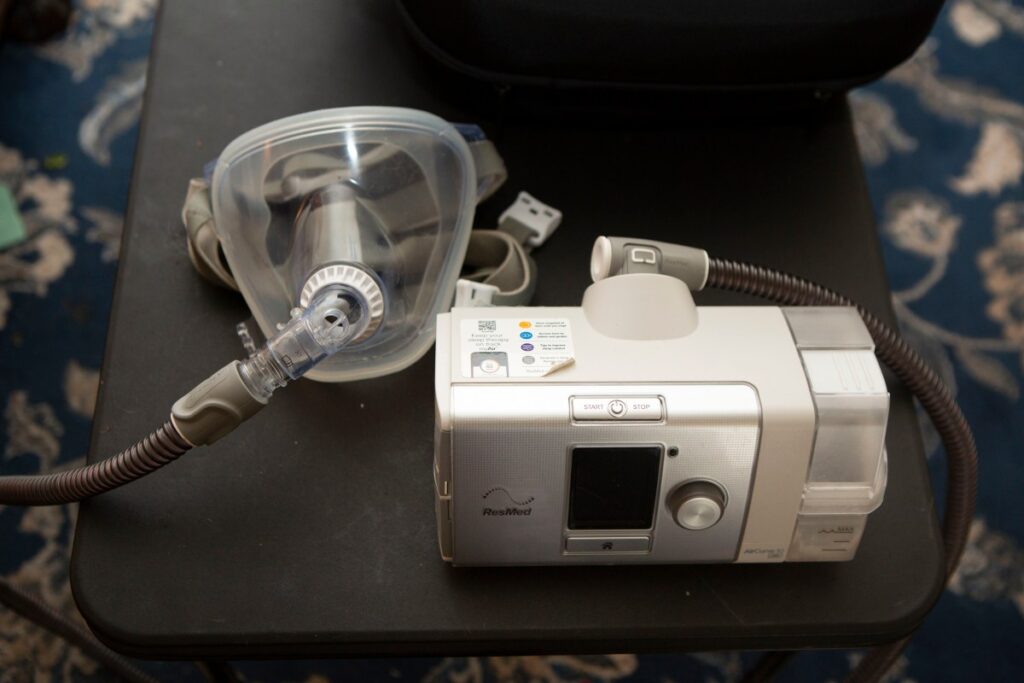
La Marca has severe obstructive sleep apnea, one of several diagnoses that exclude patients from the Bridge program’s $50 monthly price. The notification didn’t say why he was rejected. He thinks that if he didn’t have that diagnosis, he would qualify due to his weight.
“I’m obese, morbidly obese, BMI 42. I had quadruple heart bypass surgery. I’m at risk for stroke. I’m prediabetic. And yet I can’t get it. I’m livid,” he said.
A Temporary Patch for a Long-Standing Gap
About 1 in 5 American adults have taken a GLP-1 medication, and most of them, including those with health insurance, say the drugs are difficult to afford. Federal law has long barred Medicare from covering drugs prescribed solely for weight loss, which is why the Medicare GLP-1 Bridge program made a big splash when it launched in July.
It’s a short-term pilot program in which Medicare is offering coverage of three GLP-1s for weight loss and management, to see if that would save Medicare money later. Eligible patients must be enrolled in Medicare Part D, a prescription drug coverage add-on to Medicare. Even though people must have Part D insurance to qualify, the preauthorization request doesn’t go through the insurer; it’s instead submitted to a separate system run by a contractor for the Centers for Medicare & Medicaid Services.
The pilot includes Wegovy, the KwikPen formulation of Zepbound, and the oral medication Foundayo.
Under the pilot, many Medicare beneficiaries with a body mass index of 35 or higher — the upper range of obesity — qualify for coverage of one of those drugs, if prescribed. Those otherwise eligible who have a BMI of 27 to 34 can qualify if they also have certain health conditions, such as prediabetes or cardiovascular disease.
But buried in the fine print is a distinction that’s tripping up patients like La Marca: The $50 price under Bridge applies only to people using the drug solely for weight loss. Anyone who has a qualifying medical condition that the Food and Drug Administration has approved GLP-1s to treat, such as Type 2 diabetes or moderate to severe obstructive sleep apnea, is instead routed back to their Medicare Part D prescription drug plan, which can require copays of hundreds of dollars a month for GLP-1s.
“The Bridge program was designed to target those people who can’t get GLP-1 coverage through Part D but would benefit from taking one for weight loss,” said Juliette Cubanski, who directs the Program on Medicare Policy at KFF, a health information nonprofit that includes KFF Health News.
The cost to Medicare of subsidizing the drugs will depend largely on how many people use the program, and the federal government hasn’t released an estimate.
Cubanski has estimated that 3.8 million people qualify and that, if a quarter of them enroll in Bridge and remain on treatment for the program’s full 18 months, it will cost Medicare about $3.3 billion. If three-quarters enroll, costs could rise to $10 billion.
If the government expanded the program to include the additional 5.9 million people who are overweight and already eligible for GLP-1 coverage through Medicare Part D, it would add billions more to the program’s cost.
The demonstration’s initial weeks have been positive, and most prior authorization requests have been completed in under 12 hours, CMS spokesperson Timothy Foster said.
“This has allowed thousands of eligible beneficiaries to access GLP-1 medications for weight loss at pharmacies nationwide,” Foster said.
GLP-1s Aren’t Covered
Patients like La Marca are left in a tough spot, qualifying for Part D coverage of a GLP-1 but facing much higher cost sharing.
“‘Coverage’ doesn’t always mean ‘affordable,’” said primary care physician Taylor Lacy, who describes herself as a “big proponent” of GLP-1s and practices at Sunflower Medical Group in Roeland Park, Kansas.
The Bridge program is leaving behind patients with the greatest medical need, she said. She noted that many Medicare patients already must navigate prior authorization and spend months trying alternate, often cheaper treatments, a process known as step therapy, before finally getting approval — only to arrive at the pharmacy counter and discover that their GLP-1 copays will run them $200 to $600 a month, if not more.
Researchers studying how Medicare insurers cover GLP-1s have found that recipients have faced increases in out-of-pocket costs and that almost all plans now require prior authorization, which can make getting the drugs more difficult.
Chris Bond, a spokesperson for insurance industry trade group AHIP, blamed drugmakers’ prices, “which they alone set and they alone can lower.”
La Marca’s insurer declined to answer specific questions about La Marca’s case.
Left Waiting
For now, La Marca’s GLP-1 prescription remains unfilled. The severe sleep apnea diagnosis that helps establish his medical need is also what excludes him from the discount program that would bring the cost within his reach.
As he reflected on his appeals and the dead ends, La Marca paused, his eyes filling with tears of frustration.
“This is now my quest, because it’s my only chance to improve my health,” he said. “It’s the only thing left. I’ve tried everything.”
KFF Health News is a national newsroom that produces in-depth journalism about health issues and is one of the core operating programs at KFF—an independent source of health policy research, polling, and journalism. Learn more about KFF.
This article first appeared on KFF Health News and is republished here under a Creative Commons Attribution-NonCommercial-NoDerivatives 4.0 International License.
This article was originally published by KFF Health News and is republished by MetroSTL under a Creative Commons license. The reporting is the outlet’s; please support them.